
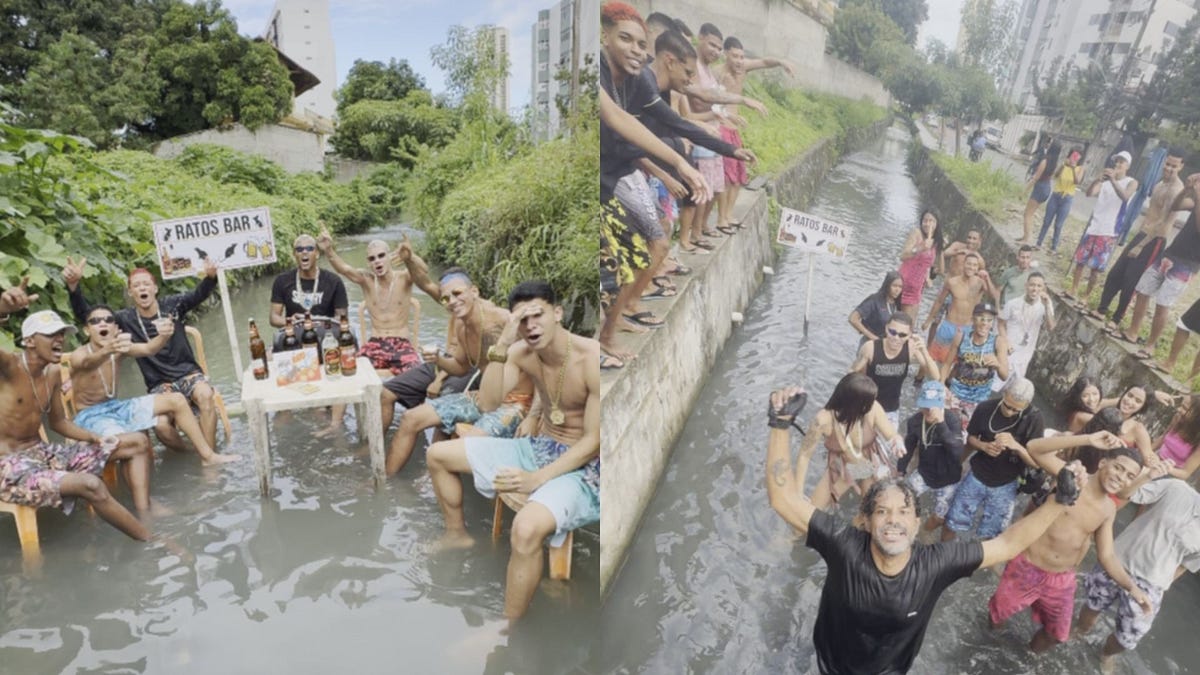
For the past few years, the global proliferation of rodents in major cities has led to headlines about an impending ‘Ratmageddon.’ In New York City alone, millions of rats scurry through the streets, often viewed as a sign of urban decay. However, in Brazil, a radical shift in perspective has emerged. In the city of Recife, the local youth have embraced the moniker ratos (rats), turning a derogatory label into a symbol of resilience, irreverence, and a unique way of life.
The Rise of Bregafunk and the Ratos
This emergent culture is defined by three pillars: a deeply flawed urban environment, the infectious sounds of Bregafunk, and a connection to the city’s mangrove geography. These kids, who identify as ratos, sport stylized hair with tails, surf-inspired streetwear, and reflective eyewear. They congregate in the city’s open sewers, transforming spaces of neglect into stages for their own cultural expression.
The movement gained international traction through the Passinho do Jamal, a dance trend that exploded on social media. Bregafunk, a genre born in 2008 that blends traditional Northeastern music with Rio funk, Angolan Kizomba, and Caribbean Zouk, provided the soundtrack. Artists like Shevchenko and Elloco became central figures, while influencers like Danilo Silva—who refers to himself as ‘Master Splinter’—began recording viral content inside the city’s sewer channels. This act of defiance, while shocking to outsiders, serves as a powerful reclamation of the marginalized experience.
Recife and the Crab Mentality
The ratos phenomenon is deeply rooted in the geography of Recife, a city built on swampy mangrove islands. This environment previously inspired the 1990s Manguebeat movement, led by the legendary Chico Science. Science used the metaphor of the crab to describe the city’s underprivileged inhabitants, who were forced to survive in the mud. Today, the ratos continue this tradition of mimicry and survival, using the ‘qui qui qui qui’ sound to replicate the distress cry of a rat, further cementing their connection to the city’s history of social struggle.
Through fashion, music, and a refusal to be ignored, the youth of Recife are proving that even in the face of crushing economic reality, there is room for innovation. By flipping the script on how they are perceived, they have turned the ‘Year of the Rat’ into a testament to their own endurance and creativity.