

There is a poignant quote by the writer Donald Barthelme, who once told a student, “What must whacky mode do? Break their hearts.” This sentiment serves as a perfect lens through which to view the music of Aldous Harding. Her work is consistently funny, surreal, and tinged with a distinct melancholy, yet it remains notoriously difficult to categorize or decode. Her songwriting often feels oblique, leaving listeners to grapple with why her lyrics and harmonies evoke such a profound, if elusive, emotional response.
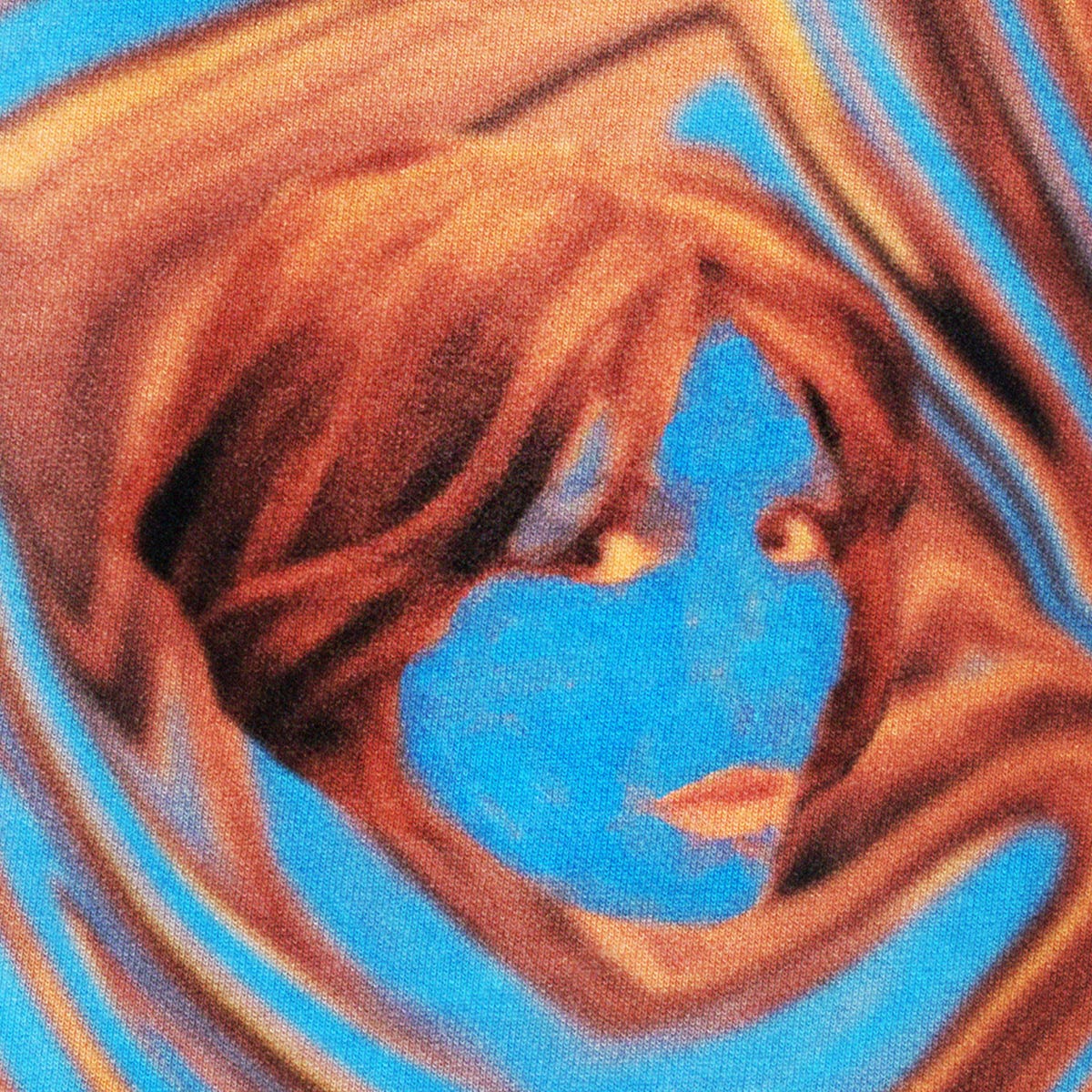
In her previous work, such as the 2019 album Designer, Harding mastered the art of the winking aside—lyrical fragments that hint at deeper narratives without ever fully revealing them. Her fifth album, Train on the Island, continues this tradition, proving that a record does not necessarily need to be a confessional or a puzzle to be solved. Instead, it suggests that music can be emotionally legible without being explicitly literal.
The power of Train on the Island lies in its opacity. Much like the sensation of observing a scene through an artificial waterfall, the distortion in Harding’s music is what makes it resonant. Tracks like “One Stop” demonstrate this beautifully; the song begins with a chipper, almost generic demeanor before blooming into something far more complex and haunting. This emotional depth is mirrored in the album’s title track, where Harding’s strident delivery and surreal imagery—such as “Sicilians reaching over the clams”—create a visceral experience that bypasses the need for logical interpretation.
Produced by John Parish, known for his work with PJ Harvey and Sparklehorse, the album possesses a “saccharine sadness” that feels both overstuffed and perfectly elliptical. Harding’s latest offering is emotionally open precisely because it refuses to dictate its own meaning. It is a miraculous, whole-feeling collection of songs that implicates the listener, transforming the internal landscape without ever needing to explain why.