
In many ways, Of the Earth represents a series of significant firsts for Shabaka Hutchings. While the English jazz innovator has built a formidable reputation through his work with The Comet Is Coming, Shabaka and the Ancestors, and Sons of Kemet, as well as a string of acclaimed solo projects, his latest release marks a distinct departure. It is his first true solo album—a project where he handled all instrumentation, recording, mixing, and mastering himself. It also serves as the debut release for his new imprint, Shabaka Recording, and features his first foray into rapping.
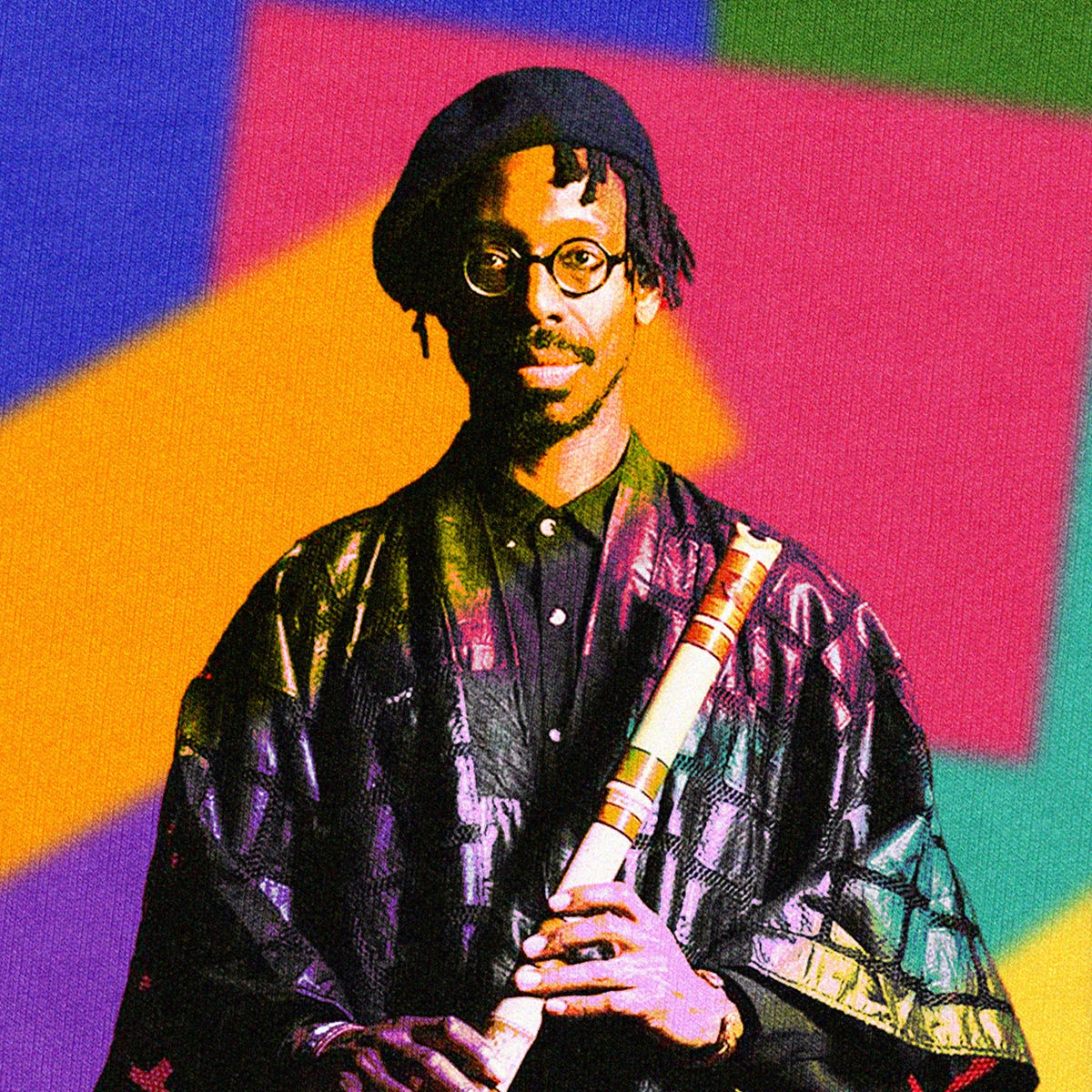
Art by DJ Short
A Return to the Tenor Saxophone
Perhaps most notably, Of the Earth signals Shabaka’s return to the tenor saxophone. After a lengthy hiatus during which he focused primarily on flutes and production, he picked up the instrument again to honor the late South African drummer Louis Moholo. Reflecting on the influence of Moholo and his peers, Shabaka notes the profound intensity and joy they brought to the London jazz scene in the 1960s—a spirit he strives to keep alive in his own work.
The album is a testament to this joy, blending layered flutes, polyrhythmic percussion, and synth textures. While tracks like “Dance in Praise” and “Step Lightly” radiate energy, the album also addresses the darker realities of the modern world. On “Go Astray,” Shabaka uses his new vocal skills to confront social and economic inequality, proving that his musical evolution is as much about message as it is about technique.
The Philosophy of Solo Creation
When asked about the decision to work entirely alone, Shabaka explains that it was a matter of artistic focus. “Solo is the only way that I can actually really focus on the full realization of the music,” he says. By removing the collaborative element, he was able to explore his own creative impulses without the compromise that often comes with group dynamics. He describes the production process as akin to “diamond mining,” where he refines raw, dense recordings into their most beautiful, essential forms.
This commitment to freedom is also what drove him to launch his own label. For Shabaka, the label is a vehicle for autonomy, allowing him to release music as it is created, unbound by external business pressures. As he looks toward the future, he plans to continue exploring free improvisation and collaborative projects, including upcoming work with pianist Pat Thomas and Palestinian musician Dirar Kalash.
“The music thing is complex and multifaceted… It’s about being perceptive to what aspects of freedom you need at what stage. And at this stage, this is what I need.”
Ultimately, Shabaka’s work remains deeply rooted in the physical act of breathing and the mental discipline required to stay present. Whether he is playing the flute, the saxophone, or experimenting with production, his goal remains the same: to create music that challenges the listener and demands 100% application from the artist.