
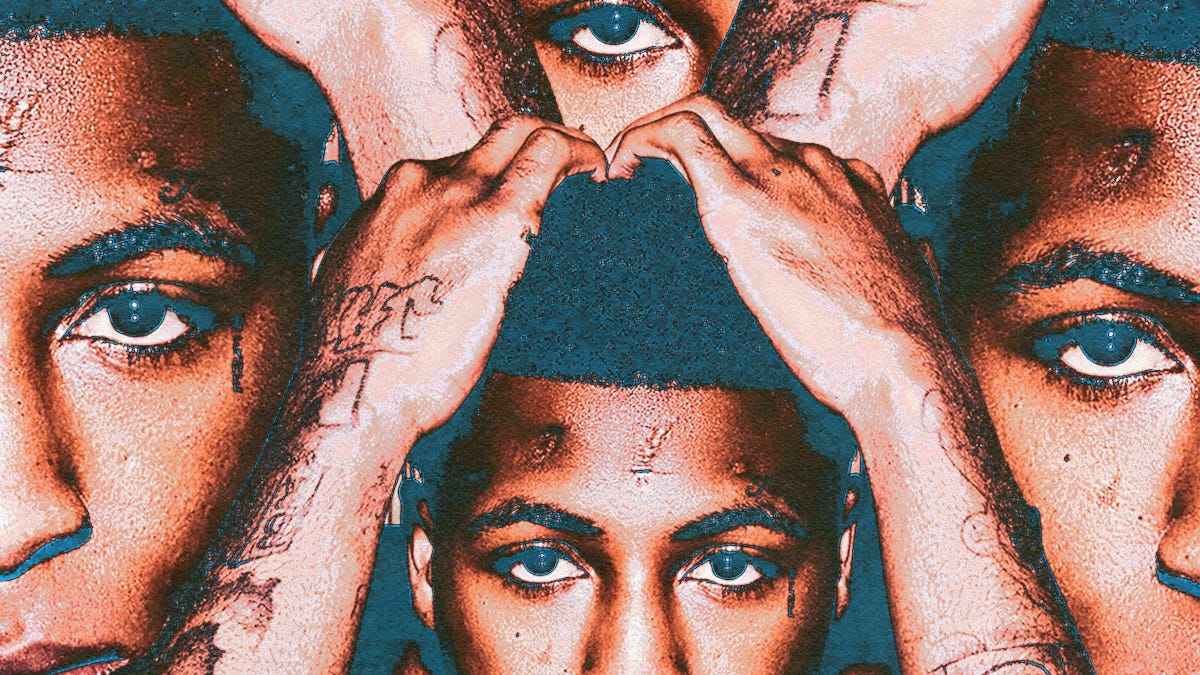
The Early Days of a Baton Rouge Icon
In 2016, I returned to Baton Rouge for the first time since Boosie was acquitted of murder charges. The city was a landscape of tension, still reeling from the aftermath of Alton Sterling’s death and the subsequent protests. My nominal purpose was a homecoming concert, but the real story was the next generation of rap stars bubbling up from the North and Southside. Among them was NBA YoungBoy, a 16-year-old whose breakout hit, “38 Baby,” served as a stark introduction to his world.
At the time, YoungBoy had just signed with Atlantic, though the news remained under wraps. When we spent time together, he was precocious, volatile, and heavily armed. To my knowledge, it was his first real interview. Shortly after I left, he was arrested in connection with a drive-by shooting, leading to a stint in parish prison and my decision to hold the story. It would remain in my hard drive for seven years, a testament to the turbulent life of one of modern rap’s most significant voices.
A Portrait of Plutonium Energy
By 2018, a major music magazine sent me back to Baton Rouge to profile YoungBoy again. The goal was to capture what made this small, unremarkable city a capital of modern American rap. YoungBoy, already a YouTube juggernaut, was the centerpiece. Yet, the cycle of incarceration continued. Between his initial rise and his eventual status as a generational voice, he faced numerous arrests, jail time, and even a presidential pardon. His music—defined by a rusted scalpel wail and raw, emotional pain—resonated with millions, even as he remained largely outside the mainstream industry machine.
During our 2018 meetings, the environment was chaotic. Surrounded by a rotating cast of friends and family, YoungBoy was a figure of contradictions: a young man who dangled a $150,000 chain while feeding a pet squirrel monkey, a teenager who had seen more trauma than most see in a lifetime. His music is a reflection of a state that has topped homicide rankings for decades, a sonic manifestation of the #freemeek movement and the systemic struggles of the South.
I’m from Baton Rouge where they wildin’ off the pills / You ain’t from where I’m from / You don’t feel how I feel / Everyday strapped up / You don’t live how I live / Police killing us and the police getting killed.
The reality of his life is often obscured by the media’s focus on his legal troubles. As his surrogate mother, Monique, noted, he is a person who has endured profound loss and pain. His music is his outlet, a way to process the environment that shaped him. Whether he is performing at a packed club or reflecting on his grandmother’s grave, the intensity remains constant. He is a product of his surroundings, a #BlackExcellence story that is as tragic as it is triumphant.
The Legacy of the Streets
YoungBoy’s career is a testament to the power of independent success. Without the traditional support of television or radio, he built an empire on the internet, connecting directly with a fanbase that understands his struggle. His story is not just about the music; it is about the cycle of poverty, the influence of the #1990s, and the relentless pressure of living in the public eye while trying to survive the streets of Baton Rouge. As he continues to evolve, his work remains a raw, unfiltered look at the life of a young man who, despite everything, is just trying to find his way.