
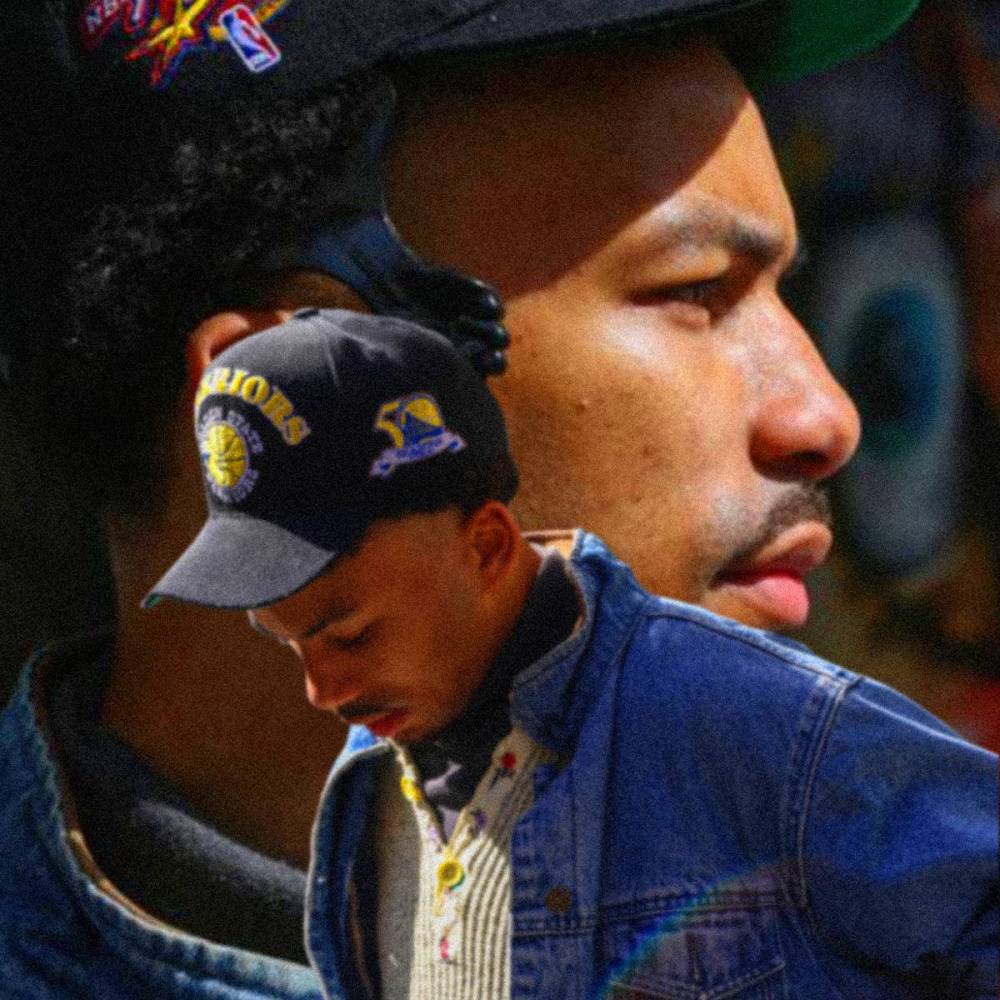
Art via Evan Solano
Dr. Dre’s The Chronic being listed as one of the best Bay Area rap albums is why Alan Chazaro doesn’t trust anything generated by AI.
Ride deep enough into Oakland, away from the glimmering shores of San Francisco’s skyline, past the shipyards and brackish waters beneath the Bay Bridge, beyond the aerosol-bombed walls near the Amtrak trainyard parallelling Interstate 880, a few stops from where BART glides through the Lake Merritt and Fruitvale Station, and even further, where an abandoned MLB stadium sits, you’ll find yourself in the heart of East Oakland. Only then, just before you reach the neighboring suburb of San Leandro, a wealthier city where trees bloom and potholes noticeably disappear, will you arrive in the Deep East.
East Oakland is responsible for supplying some of the most notable rappers in West Coast lore, not limited to Too $hort, MC Hammer, and the Hieroglyphics. Go back to the regional birth of the genre in the early ’80s, and trace that wavelength into the present day, and you’ll uncover a slew of slick word benders who grew up in the East: Shock G, the Luniz, Keak Da Sneak, Philthy Rich, Trunk Boiz, Clyde Carson, Kamaiyah, Damian Lillard, 22nd Jim, 1100 Himself, ALLBLACK, Ovrkast., Seiji Oda, Aflacko. Ad infinitum.
Here is also where you’ll find Michael Sneed, a Gen Z songwriter, producer, and vocalist who grew up near the 106th and MacArthur intersection. Sneed adds his own hyphy-injected Broadway musical flair in a manner that both adapts and experimentally deconstructs the perception of what East Oakland hip-hop is, or could be. He’s a griot from the internet age, a New Oakland vanguard scripting verses as community historian and de facto pastor. He’s a chosen disciple who KRS-One once declared transcendent and invited to perform at his concert after hearing an adolescent Sneed freestyle at his middle school–in which the South Bronx luminary gave a seminar on the role of hip-hop as guttural medicine evolved across centuries and continents and peoples.
Sneed’s connection to Deep East Oakland is built across multigenerational lineages of migration and persistence. He’s a neighborhood baby raised inside parochial churches next to liquor stores, where sideshows and other kinds of illicit activities are popping off. The sort of place where, as he recalls from his middle school youth, you might see a local icon like DB Tha General sliding down the avenue in a scraper, flipping off anyone who stares for too long.
A relatively forgotten part of the East Bay metropolis, Deep East Oakland is so distant from Oakland’s commercial core that it feels like an afterthought for city officials and left to fend for itself. Simultaneously, the city as a whole is rapidly gentrifying, and isn’t what Sneed once remembers as home. In Oakland, like most major U.S. cities, housing displacement has disproportionately affected Black families in recent decades, with local reports showing a 27% drop in the city’s Black population in the past ten years, despite an overall population boom in Oakland.
The result of all that is a grown up version of Michael Sneed: a polymorph, at once regionally-informed by Oakland and unfettered by the conventional expectations of his area code. He’s a walking amalgamation of Baptist churches in the form of Bay Area mixtapes. His pneuma is optimistic gospel meets soul-weathered blues. He’s Pixar musical scores DJed by an unexpectedly aggressive hypeman inside an NBA arena. He’s a hybrid cover band of A Tribe Called Quest, Bone Thugs-N-Harmony and The Fugees, performed on a slam poetry stage as a 20-something-year-old idealist.
floaters at the buzzer! is Sneed’s latest — a 12-song, 36-minute odyssey in search of himself as an Oakland musician, mixing Jeezy’s Atlanta trap anthems, Jersey club, and HeartBreak Gang’s post-hyphy party bangers with snap-your-fingers jazz, Michael Jackson pop, and Disney Channel sing-alongs.
In a 90-minute phone call in which the young artist grapples with the complexity of inhabiting so many interests, and navigating the masculinized pressures of being a rapper, Sneed retraces his journey with as much sincerity as anyone can ask from a young California star-in-the-making.