
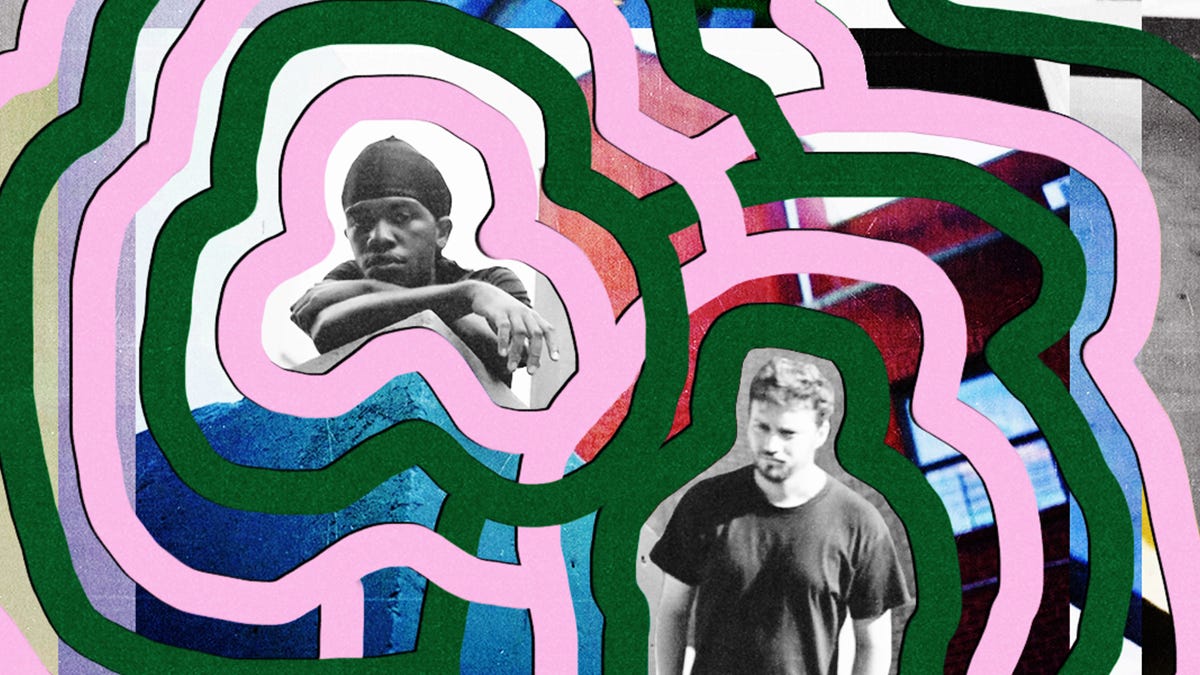
Though the record is titled the hermit, the collaborative duo of shemar and Sasco approaches their craft with a distinctly pro-social philosophy. The pair—shemar, a rapper-producer known for serpentine flows and deeply personal lyricism, and Sasco, a producer pushing the boundaries of New York’s underground scene—possess an easy rapport that suggests a shared creative consciousness. Their process, often conducted through digital exchanges and late-night sessions, has culminated in a four-track EP that serves as an ode to both the necessity of isolation and the desire to escape it.
Chasing Ghosts and Creative Lineage
The genesis of the hermit was born from a long-standing intention to create together, solidified when previous collaborative efforts fell through. For shemar, the project became a vessel for reworking older concepts into a new, more focused headspace. Sasco, meanwhile, brought a technical experimentalism to the table, notably drawing inspiration from William Basinski’s The Disintegration Loops. By applying MP3 degradation to his production, Sasco created a sonic landscape that shemar further textured with references to Tennessee Williams’ The Glass Menagerie.
For shemar, the play has been a lifelong touchstone. “I think have very consistently seen myself in the main character—for better or for worse,” shemar explains. This connection to the performative nature of the play mirrors his own internal dialogue regarding his identity as an artist. “I’ve been working on an album independently… and a lot of that has had to do with just this idea of performance. My literal government name is Shemar, and having to engage with the question of, when someone is saying ‘Shemar,’ are they talking to Shemar the person? Or shemar the rapper?”
Art by DJ Short
Navigating the Modern Grind
The title of the EP reflects a conscious withdrawal from the relentless pace of the modern music scene. Both artists acknowledge the exhaustion that comes with constant output and the pressure to remain perpetually “outside.” For shemar, the decision to retreat was also deeply personal, following the passing of his father. “I don’t want to be outside. I’m just going to be in my hole. I’m going to reflect and sit with myself,” he shares. The imagery of the Hermit tarot card—a figure in a hood with a staff—became a fitting visual representation of this period of introspection.
Sasco, despite his prolific output, shares this sentiment of needing to maintain artistic autonomy. Reflecting on his recent projects, he notes the importance of avoiding being “boxed in.” His commitment to exploring diverse sounds, from jazz-influenced drumming to experimental electronic textures, remains a priority over commercial expectations. “I don’t really want to work with someone who’s telling me not to do that album,” he says of his creative choices.
A Foundation of Black Arts and Jazz
When discussing their influences, both artists cite deep, historical lineages. shemar points to the Black Arts Movement, citing Amiri Baraka, Henry Dumas, and Toni Morrison as foundational, alongside modern rap peers like Elucid and Ka. Sasco, rooted in his background as a drummer, draws from the jazz greats—Tony Williams, Elvin Jones, and Wayne Shorter—as well as experimentalists like Pauline Oliveros and Autechre.
Ultimately, the hermit stands as a testament to their collaborative growth. By stripping away the ego and focusing on the work, shemar and Sasco have created a project that feels both intimate and expansive. As they continue to navigate their respective careers, the duo remains committed to building worlds that are distinct, focused, and deeply personal.