
Art via Michael McKinney
Michael McKinney understands the cultural importance of Kreayshawn’s “Gucci Gucci.”
In January, plenty of the world’s finest selectors proved their chops yet again, going deep on all sorts of sounds in the process. Black Rave Culture turned in an hour of breakbeat barnstormers for Carhartt Radio; elsewhere, Objekt looked towards contemporary brain-benders the world over. Andy Warren, Bored Lord, and Raphaël Top-Secret offered up a cumulative eleven-odd hours of sun-blasted disco and house records; Amelia Holt, meanwhile, looked at her four-fours and found something a bit more rough-and-tumble. Yuzo Iwata, in a recent entry to pi pi pi’s winning mix series, imagined downtempo music as something thoroughly psychedelic, and Jess Sneddon split the difference between languid ambience and full-on club belters.
Arthur, a Berlin selector, went full-bore on the sounds of contemporary amapiano, and Vina Konda turned in a fever-dream session of trap, metal, and industrial sonics. Bobby Beethoven, a veritable veteran of heavyweight dance musics at this point, cooked up another set of alchemy for Unsound, and deep creep went slow-and-low with a killer techno-et-cetera mix. Elsewhere still, Destiny & Max turned in a New Year’s party for the ages and JS flipped between all sorts of who-knows club sounds with aplomb. 131bpm, in a killer set misleadingly titled as #ambient, careened between all sorts of contemporary UK sounds, and Katatonic Silentino brought the listening bar into the club. (Or is it the other way around?)
Here are some of the best DJ sets January had to offer.
How’s this for a misdirect? Moon Gazing presents “Music in praise of the Moon,” the kind of thing liable to make most listeners think of sound baths and otherworldly ambience. (This particular recording is even tagged as such.) But, on Moon Gazing 043, Berlin’s 131bpm uses those kinds of vertiginous electronics as a launching pad, aiming instead towards full-on dancefloor euphoria. In truth, the most impressive part of the session is less in any particular blend or idea but in its ebb and flow. Here, 131bpm moves from acid-flecked ambient-techno to rollicking breaks with the flick of a dial, or from dreamy trip-hop cuts to riotous drum-and-bass, or from sort-of-trap instrumentals to downtempo dubstep, with ease. Again and again, whenever the set threatens to lock into a clear groove, 131bpm throws a wrench into the works, flipping energy levels on their head in the process. Eventually, its rhythm starts to recall the tides: Maybe the mix series’s subtitle carried through after all.
Last August, Bored Lord — a.k.a. Daria Lourd, one of the finest selectors on the modern West Coast — played a four-and-a-half hour set of house and disco stompers for Bar Part Time, a critical San Francisco wine bar with a killer SoundCloud account. That one is, in a word, fantastic, so why not run it back? Live @ B.P.T. is, blessedly, more of the same: here, one of Oakland’s finest goes deep on house, disco, and soul records, flooding the decks with lushly orchestrated grooves and lovelorn vocal runs, working with a quiet kind of mastery throughout. (These tracks are, all things considered, not particularly friendly behind the decks: these rhythm sections have so much going on that it’d be easy for blends to turn a hair too cluttered.) Live @ B.P.T. is a veritable clinic, one riotous four-four at a time.
Half an hour into Live at Bar Part Time, Andy Warren makes it clear he’s working in a similar mode. The track he pulls up — backing vocals from Donna Summer’s “Bad Girls” dunked into a bucket of syrup, with some sort of lounge-room house-music groove rattling underneath — is both delirious and historically conscious, an effort to take classic disco sounds and stretch them towards outer space. In this sense, it recalls Bored Lord’s session; here, Warren takes old-school dance-music idioms and pushes them towards altogether stranger places. That can, of course, mean just about anything: it might be rickety electro-disco, it might be duets for dust-covered Moogs and MIDI hi-hats, it might be new-wave steamrollers, it might be “I Feel Love” slammed into speak-sing post-punk records. In any case, it’s a remarkable genre exercise pulled off with aplomb: four hours of uncut party fuel played with a grin.
In case eight hours isn’t long enough for you, though, why not hop on a flight to Paris? With Crown Ruler Mix #38, Raphaël Top-Secret puts together a long-form exploration of boogie, house, and disco slammers, mixing with a winking sense of joy throughout. It would read like a historiography if it weren’t so much fun: here, it’s lo-bit synth soli and four-part vocal harmonies; there, it’s horn-section screamers with locked-in rhythm sections; elsewhere, it’s hi-NRG Chicago house selections, all whispered come-ons and slamming basslines. No matter the specifics, though, Raphaël’s focus on an ebullient kind of joy makes the whole thing sparkle. Throughout the session — two hundred minutes that really ought to run for twice that — the Parisian DJ stuffs the amps with sunlight.
One of the greatest appeals of amapiano and gqom — two dance-music styles that are, for all intents and purposes, perfect — is the way they treat negative space. Both genres, for all their heavyweight sub-basses, are pretty minimal; they often just have a few drums clattering away at any given moment. But never mind that: pitch the amps right and you might level an apartment stack. Arthur shows off the physical power of the stuff on Live at the Edge, a remarkable recording most notable for its central argument: this is body music, first and foremost. It helps that the session doubles as a survey of amapiano, gqom, 3-step, and Afro-tech — a universe of styles bound together by a shared interested in acrobatic drum programming, MIDI synth blasts, dancefloor minimalism stretched to a breaking point, and amp-busting energy. In this focus, Live at the Edge is both hyper-specific and boundless: a single gem looked at from a million angles.
The liner notes for Amelia Holt’s Forge entry put it simply: “feminine, seductive, alluring, and indulgent.” Fair enough. Holt is one of New York’s finest working selectors, a status that is in no small part due to that very description: her work is playful and wigged-out in equal measure, aimed straight at the ravers but with plenty of winks and nudges tossed in between the kicks. On Forge, the DJ — who can often be found flitting between techno, coldwave, and all manner of sludgy four-fours — goes uncharacteristically straight-ahead. (It’s in the tags: #Sassy House.) The results are, predictably, full-on fingergunners, with Holt’s every selection bound by a shared sense of Devil-may-care glee and a not-infrequent invocations of vintage dance-music idioms: chunky house cuts that nod towards both New York and Chicago, shuffle-and-skip two-step, acid-drenched psychedelia, retrofuturistic electro. As the set runs on, Holt leans both quicker and more bruising, cranking up the BPM even as the textures get rougher. It’s like listening to a tape degrade in real time — fortunately, you can always run it back.
Black Rave Culture don’t leave much up to the imagination. The Washington, D.C. trio — James Bangura, Nativesun, and Amal, all great producers in their own right — have built their collective discography atop Black dance musics, with tracks that both honor its histories and celebrate its possible futures. Critically, though, it’s always a great time: sweat-soaked, rigorously studied, jubilant, a bit madcap. (Their live set, relatedly, is not to be missed.) On Carhartt WIP Radio, they send out another hour of their trademark rave-music timeline-collapsers, slamming sounds from Baltimore, Miami, Chicago, Lisbon, and Durban into each other. The set is dominated by breakbeats, make no mistake, but there’s a million sidebars and blind alleys, too: why-not soul flips and Baltimore club screamers, “Percolator” and straight-up hard house, acidified drum-and-bass and chopped-up R&B hair-raisers. Eventually, the sheer dynamism becomes the point. Carhartt WIP Radio is an unmissable argument for the vitality of contemporary Black dance musics.
In case you needed an argument for GHE20G0TH1K as one of the twentieth century’s most influential dance-music institutions, here’s two. First, Bobby Beethoven — a.k.a. Ashland Mines, f.k.a. Total Freedom — turned in a hair-raising set for Unsound’s mix series. The set, recorded live in Kraków last October, runs just south of ninety minutes but feels half that thanks to Mines’s everything-at-once approach. Broadly speaking, this is rough-and-tumble club music, but that can be just about anything, as Miles makes a point of underlining. Scan around and you’ll find just about a million shades of the stuff: light-speed breakcore, which Miles collapses to reveal — what else? — Gothic-horror organ screamers; bounce records with digital detritus stuffed into the cracks; gabber-trap skull-stompers; wall-of-sound drone records; feel-bad R&B bootlegs; and so much more besides. The fact that it coheres at all is its own feat, but Mines is a veteran of hell-raising DJing. Here, he conducts chaos with an unerring grace.
That said, it’s not like the GH20G0TH1K alumni get all the fun. Vina Konda’s entry in GROOVY GROOVY’s fledgeling mix series shows the Parisian DJ using the decks for a straight-up exorcism, creating a set that reflects the anxieties inherent to a world sprinting to the political right. “Between wars, genocides, economic crises, and the rise of the far-right, finding anchors in an everyday life that is normally hyper-violent has become extremely difficult for me,” they wrote in the liner notes, and 010 is accordingly chaotic: the set is a fever-dream of trap, metal, and wild-eyed electronics. The most impressive part of it all, though, is perhaps the simplest: that it works at all. On paper, a lot of this thing really ought to fall apart — Konda more or less kills the BPM multiple times, they pull up several aggressively misanthropic and narcotized rap records, and they whip between sonic ideas at a staggering clip. (At one point late in the mix, Konda moves from a lo-bit Baltimore-club orchestral number to a vintage PC Music tri-tempo stomper, and it’s among the less audacious blends in the session.) But, with 010, Konda manages to hold all sorts of white-hot sounds together through sheer force of will, lacing the dance floor with barbed wire all the while.
At this point, Brooklyn DJ deep creep is a column mainstay, and with good reason. Between their own mixes — which are typically chuggy, playful, and plenty cheeky — and her work at pi pi pi (more on that at the bottom of this column), the musician born Sasha Cwalino is behind some of the most critical left-field dance-music selections out there. Untitled 909 Podcast 260, ripped live from the Globus decks last August, sees Cwalino continuing her hot streak by digging deep into her own archives, playing stuff she’s most comfortable with rather than pushing into too-unfamiliar territories. Fortunately, her preferred haunts are plenty odd already. Here, she offers up three hours of bleary-eyed techno, all pointillistic minimalism, spaced-out grooves, and just-sexy-enough basslines; the odd blast of spoken-word incantations only deepens the trance.
It’s easy to wax philosophical about DJing — guilty as charged! — but, sometimes, it really is that simple. On NYD 2026, Montreal-based DJ Destiny (f.k.a. choozey) teams up with Max, a Toronto staple who co-founded the Best in (and Out of) Town Sound party for two hours of no-shit party-starters: rollicking UKG, heads-down hand-drum techno rollers, lighters-up bassline, bubbly disco cuts, and just about anything liable to set the room alight. Given there’s little throughline here beyond sun-blasted grooves, this is the kind of session that lives and dies on its blends; fortunately, Destiny and Max are both virtuosic DJs with plenty of experience. There’s no peacocking here, just careful beat-matches and quietly considered connections. NYD 2026 is a killer example of an easily-overlooked style of DJing: no-frills party-starting done to a tee.
There’s a lot of remarkable moments on Soma Festival 2025, but one, in particular, stands out as something of a tipping point. Seventy minutes into the session, it feels like Melbourne’s Jess Sneddon is juggling four balls at once: a few radio-drama spoken-word bits talking over each other, a breakbeat that wouldn’t sound out of place on an Erik B. & Rakim record, reverb-soaked hand drums, a bleary-eyed synth track whose slo-mo psychedelia is rendered even more disorienting by the all-at-once surroundings.
It’s entirely possible that it’s just one track, no matter how Dadaist, but that’s beside the point. For just a moment, Sneddon crashes the sounds of nu-school downtempo with low-slung rave cuts, easing the midafternoon crowd at Soma into a different mood in the process. It’s far from the only notable bit in the session, which sees Sneddon moving from no-BPM ambient-music fever-dreams to hi-res progressive house (echoing contemporary trends in Australia, whether that’s out-there trip-hop nights or old-school rave revivalism), but it is perhaps the most indicative. Soma Festival 2025 is the sound of zonked-out electronics turning, beat by beat, into something a bit more sweat-soaked.
Funnily enough, @ Flip 2 also pivots about an hour in, moving from slow-and-low electronics to something more hefty. In a thematic sense, it makes for a killer back-to-back with Sneddon’s session, but it’s great on its own merits, too, something that should come as little surprise: JS is a serious heavyweight in modern electronic music. The Los Angeles-based DJ and producer runs Motion Ward, a critical label at the bleeding edge of a million styles — new-school ambient music, trip-hop, club-oriented dub, glitch. But Jesse Sappell’s crates run deeper than that: sometimes (often!), he even plays straight-up dance music.
On @ Flip 2, JS taps into his indie-music and club-music predilections in roughly equal measure, toggling between heart-on-sleeve dream-ambient and polyrhythmic barn-burners. (By and large, the first hour is made up of the former, while the second two hours are made up of the latter, but it’s hardly a hard-and-fast rule.) The set is delirious, playful, and plenty emotive; you can practically see the grins plastered on faces as the set runs on, with JS pulling out brain-bender after brain-bender. To grab one of a million, the set peaks with some sort of deeply unfashionable and wild-eyed big-beat slammer before dropping straight into syrupy trip-hop. @ Flip 2 is packed with moments like this. Here, a DJ who’s built his career on the fringes delivers his own gnarled vision of dance music.
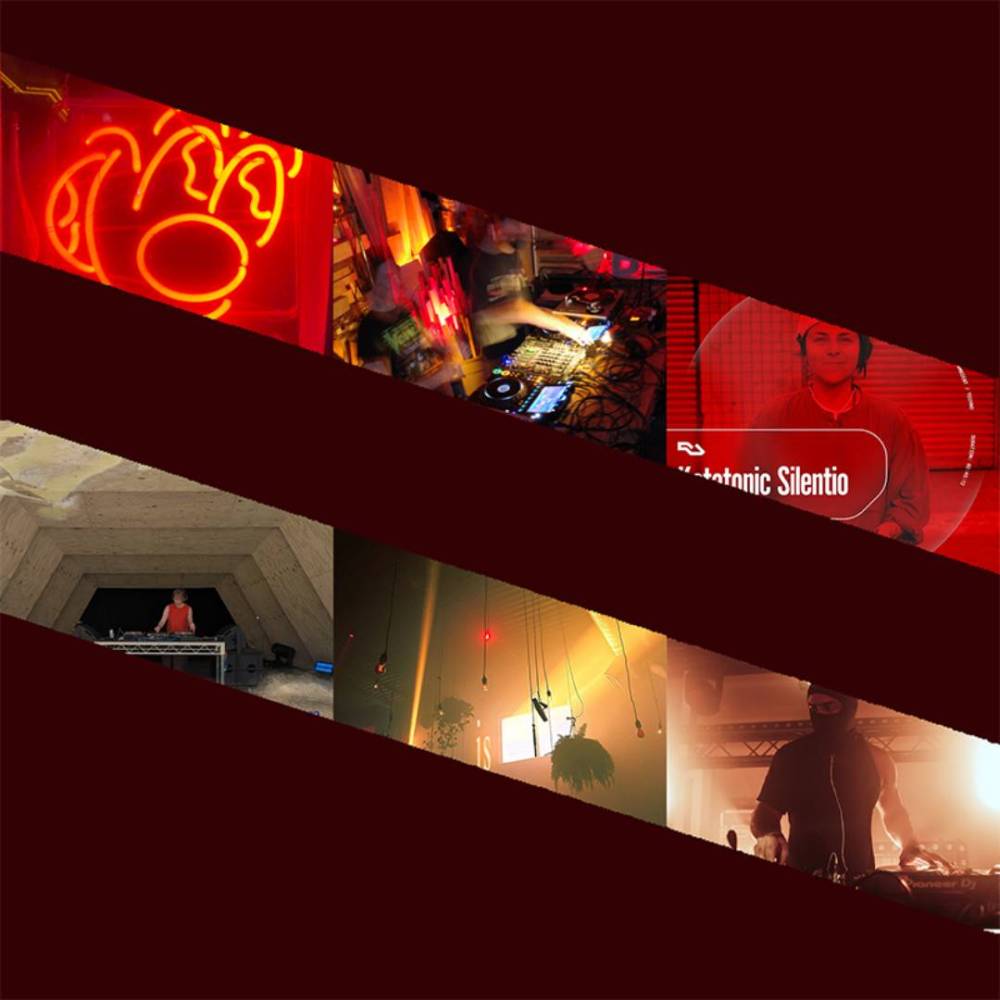
Katatonic Silentio, a.k.a. Milan-based producer Mariachiara Troianiello, has spent her career taking dancefloor idioms and blasting them with smog; her best material, more often than not, looks somewhere else entirely. On RA.1021, she traverses an entire stylistic universe, moving, slowly, from the listening bar to the afterparty: scan around and you’ll find modern-classical piano soli and dubwise minimalism, lovelorn balladry and out-and-out free jazz, fourth-world ambient techno and loopy acid cuts, jubilant jazz-fusion drum solos and sample-chop French-touch wizardry, and plenty more besides. If that all sounds a bit wide-ranging, that’s part of the point. The most impressive thing, here, is Troianiello’s touch behind the boards; throughout the set, she mixes with a collagist’s eye, never turning down a chance for a hard left turn but always finding aesthetic throughlines. It’s an exercise in anything-goes mixing that immediately stands out as one of the year’s finest.
To put it plainly, Objekt, a.k.a. Berlin-based selector TJ Hertz, is an exceptionally talented DJ in an extremely crowded lane. High-octane pan-genre mixing isn’t exactly in short supply right now, but Hertz’s best stuff sees him running laps around most folks doing it, in large part thanks to sheer heft: he favors speedy-and-precise club tools, all post-post-post-UK sounds mixed at a mile a minute. PURE Guest.100 sees him in fine form yet again, blending up two hours of who-knows-whats with the best of them: screw-face drum-and-bass careening into astral-meditation techno tracks, didgeridoo-blasted dub next to echo-drenched field recordings, bleep-techno tools laid atop cheeky R&B refixes. For all the characteristic genre shuffling Objekt engages in here, his unerring focus on club-night energy — heads-down, a bit playful, and plenty tripped-out — ensures the whole thing’s wound up tight as a drum. This is the sound of a master at work.
In the Q&A that accompanies 36.2°C, Fabio Lazaro—a.k.a. Berlin-based techno-et-cetera producer and DJ Yuzo Iwata—describes the mix as a “languid downtempo trip.” There are certainly moments where that rings true: a bit of Ibizan experimentalism forty-odd minutes deep; a bleary-eyed techno cut Iwata pulls out ten minutes in, with field recordings interlaced between the kicks drums; a wigged-out jazz-fusion-slash-house roller they grab ten minutes later. But it’s more interesting for its rug pulls, for its moments where Iwata pulls a hard left and careens from blissed-out dance-music idioms to slo-mo synth workouts, or from reverb-soaked sort-of-pop records to wiggly and ebullient house records that sound ripped out of a ‘92 warehouse rave. It’s all “downtempo,” broadly speaking, but, over the course of 36.2°C, Iwata proposes a maddeningly expansive definition for that term, looking across decades and eras, blending all manner of sounds with an unmissable ear for the psychedelic.
We rely on your support to keep POW alive. Please take a second to donate on Patreon!
