
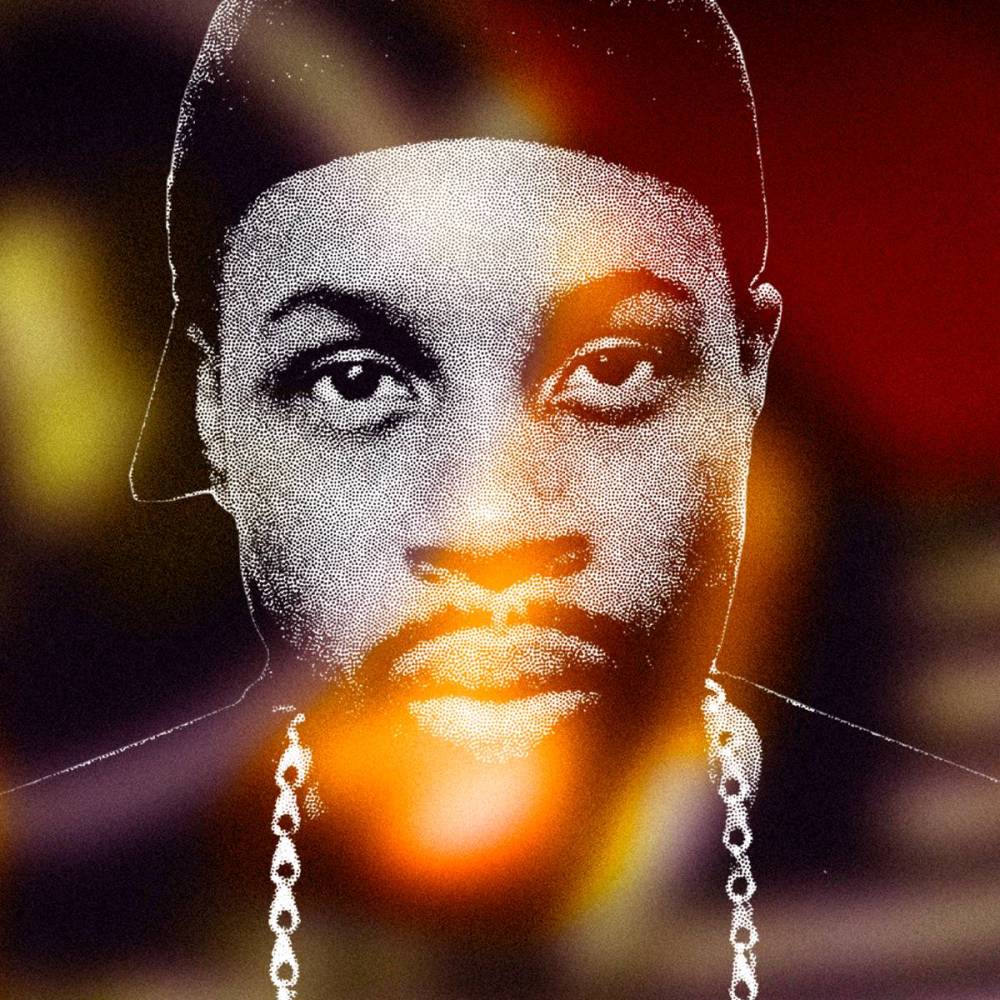
Art by Evan Solano
Elmattic can’t stand to see you cry.
With all respect to Mantronix, Dilla was King of the Beats. It’s been 20 years since James Yancey dropped Donuts on his 32nd birthday and died only three days later, forever linking the music with his memory.
Donuts is a quantum leap forward, but one filled with ancestral soul. A blast of musical innovation nearly obscured by its heartbreaking mythos and legacy. This is the sound of a young, dying genius creating his magnum opus in the hospital while dying of lupus and a blood disorder. The tracks are short, chaotic and restless, compressed to sketches, suffused with the awareness that there were only a few breaths left. It’s a desperate attempt to stop time. While making it, Dilla had a vision of Ol’ Dirty Bastard, who told him: “Don’t get on the red bus. That’s not gonna take you where you want to go. Get on the white bus.”
In Dilla Time, Dan Charnas disputes the 11th-hour story. According to his research, it was mostly finished earlier. But where would hip-hop be without its legends? It’s part of how the culture enshrines its saints, builds a cosmology, and preserves history.
There are infinite Dilla fables. He supposedly couldn’t fall asleep as a child without hearing jazz. He learned how to use samplers and drum machines without being taught. He DJed a park jam at the age of two, his arms dripping with 45s like bangles. And of course, the last legend of all: Ma Dukes massaging his fingers, so he could keep tapping that sampler to finish Donuts.
Donuts was originally meant to be “a compilation of the stuff I thought was a little too much for the MCs…Me flipping records that people really don’t know how to rap on but they want to rap on.” Would the record be a classic if not for his death? It’s hard to say, but that’s part of its tragedy and mystery. Donuts is full of hints of the songs we might have gotten later. When Dilla died, he left behind something like 4,000 beats. There was so much further that he would’ve traveled. And in that respect, Donuts is also the sound of theoretical breakthroughs that he unfortunately never reached.
Dilla’s tragically short life was full of false starts, abrupt stops and disappointments. He constantly reinvented himself and his sound – always moving forward, past himself, changing his name , style, and sound. This impatient energy is at the heart of Donuts. Frank Nitt recalled him getting annoyed by people wanting beats that were only three months old: “He’d be like ‘Aw man, they want this old ass beat, I don’t even fuck with this beat right now.’”
Much of the Dilla canon was conceived in the service of other people’s voices and visions. As a producer-for-hire for everyone from the Pharcyde to Janet Jackson, his beats don’t sound like anyone else. But Donuts is Dilla’s raw voice. It’s so personal as to be unknowable and ultimately resistant to one singular interpretation.
Donuts dispenses of hook, bridge, consistent beat loops and tempos, and traditional song structure. Instead, the Conant Gardens native built miniature suites out of disparate samples, pulling everything from the “UFO” break and Firesign Theater, fitting new and known together in ways that would otherwise seem dissonant. There’s no attempt at transitions; Donuts careens and swerves. It loops itself, eats itself, makes and remakes itself. It’s one of those handful of albums you can leave on repeat for an hour or two or infinity.
“Don’t say goodnight, it’s time for love,” as the Isley Brothers sing before Dilla twists the sample. Dilla’s swan song is a love letter: But these tracks are also drafts, complete yet incomplete, drawings for temples never built – the last donuts of the night. However, it’s not regretful; it’s softly raging against his imminent death, squeezing out every last drop of life.
If sampling is a musical time machine that can bend, warp, stretch, compress, reach forwards and back, Dilla stops the clock. Donuts begins with an outro and finishes with “Welcome to the Show.” Time is warped and inverted. The end of that last track loops right back to the start – a temporal möbius strip, infinity brought to bear.
Ultimately, the tales and the tragedy loom larger over the album than the work itself, because it’s hard for regular listeners to understand how he created these sounds, and why they sound so radically different. Dilla’s innovations break the rules around time, sampling, and drums; they re-humanized music in the age of mechanization.
Hip-hop producers make machines operate in wholly new ways (they run the record back and forth on the turntable, make records from snippets of older wax). Dilla took it up to a higher echelon. Anyone can learn to scratch or sample, but he managed to do it in a unquantifiable and inimitable way.
Dilla famously didn’t use quantization – meaning that he turned off the MPC function that corrects timing and position of sounds along measure. It allowed him to play his drums manually, humanistically, in real time, introducing warmth and flaws. It’s not just his un-quantized drums, it was also the way that he fed his source vinyl directly into the sampler and chopped it up while it was playing – all of it, entirely off instinct. Instead of starting his loops from the 1 on a 4/4 meter sample, he’d start wherever he felt worked, and change the speed to match the tempo, flipping from measure to measure, backyard to yard.
In Mo Meta Blues, Questlove says: “It was almost like someone drunk was playing drums—or, more so, that a drunk, brilliant four-year-old had been allowed to program the kick pattern…At that moment, I had the same reaction I do to anything truly radical in hip-hop. I was paralyzed, uncertain how to feel.”
Somehow it all works, it all sounds right—and it’s infused with purposeful human error, putting the soul back into a music that began with the warmth of funk but had fallen often to the strictures and regulation of computerized production.
Beatmaking is harnessing energy: capturing and creating power from records. Think of Kool Herc, watching the dancers from behind the decks, knowing which breaks made them move and shake, and bringing this fire to the disco inferno. It’s not long before Flash and Grand Wizard Theodore drove the wheels of steel with scratching, an industrial revolution, steam shooting from their ears. Then came the sampler, juice on a loose electric wire – with producers like Ced Gee and Paul C. using samples as notes instead of looping breaks.
Next came Marley Marl, capturing a snare hit on his E-mu Emulator and tapping out a new rhythm: no more drum machines or breaks needed; he split the atom. All of that happened in less than fifteen years – a breakneck musical evolution that the world had never previously seen. Somehow, Dilla offered another revolution, introducing radically original theorems that everyone had been trying to replicate for the last 20 years. His signature approach too rhythm, harmony and timing are still studied by producers and jazz musicians today.
No one can really replicate what he did. You can make a Dilla Type Beat – as so many have – but you’ll never get the precise recipe to get the right flavor of sprinkles on your donut.
We rely on your support to keep POW alive. Please take a second to donate on Patreon!
